Create Visibility From Disconnected Systems
Organizations often inherit disconnected platforms, manual workflows, fragmented communication channels, and limited operational visibility.
KoN Corporation helps professional organizations evaluate digital systems, workflow integration, communication infrastructure, and modernization readiness before inefficiencies become operational constraints.
Strategic operational advisory designed to improve organizational alignment, decision-making, modernization readiness, and long-term adaptability.
Organizations often invest heavily in technology, personnel, and operational infrastructure without establishing the governance frameworks, planning structures, and operational architecture necessary to support long-term success.
As organizations grow and evolve, leaders increasingly face questions involving workflow design, operational consistency, continuity planning, AI adoption, organizational dependencies, and future-state development.
Without structured planning and governance, operational complexity often increases faster than organizational capability.

KoN Corporation helps organizations evaluate operational systems, develop governance frameworks, and create structured pathways for modernization, continuity, and long-term organizational development.
Strong organizations require more than effective technology and infrastructure. They require intentional operational design, clear governance, documented decision-making frameworks, and structured planning processes capable of supporting growth, transition, and modernization over time.
// WHY SYSTEMS MATTER
Why Operational Systems Matter Beyond Daily Operations
Operational systems influence far more than immediate productivity.
Governance frameworks, workflow architecture, continuity planning, operational assessments, and modernization strategies shape how organizations make decisions, manage change, allocate resources, and maintain long-term effectiveness. When these systems evolve informally, organizations often experience inconsistent execution, unclear responsibilities, reactive decision-making, and difficulty adapting to future challenges.
A structured advisory approach helps leaders create operational clarity while building a stronger foundation for organizational development.
Strong operational systems improve decision-making today
While strengthening organizational adaptability tomorrow.
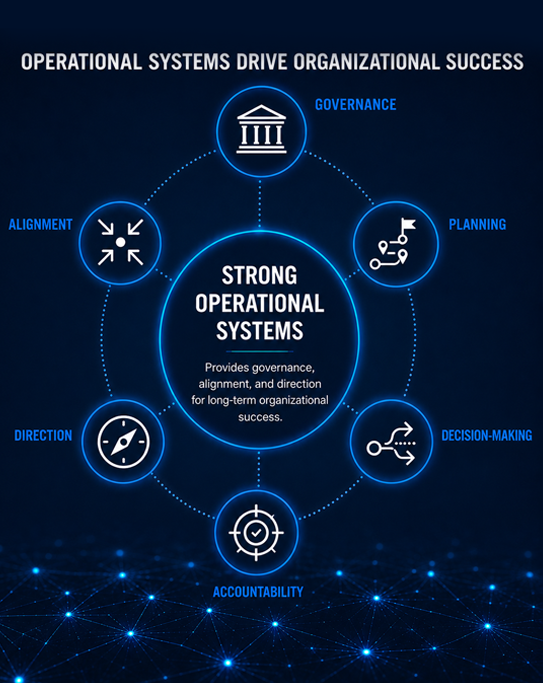
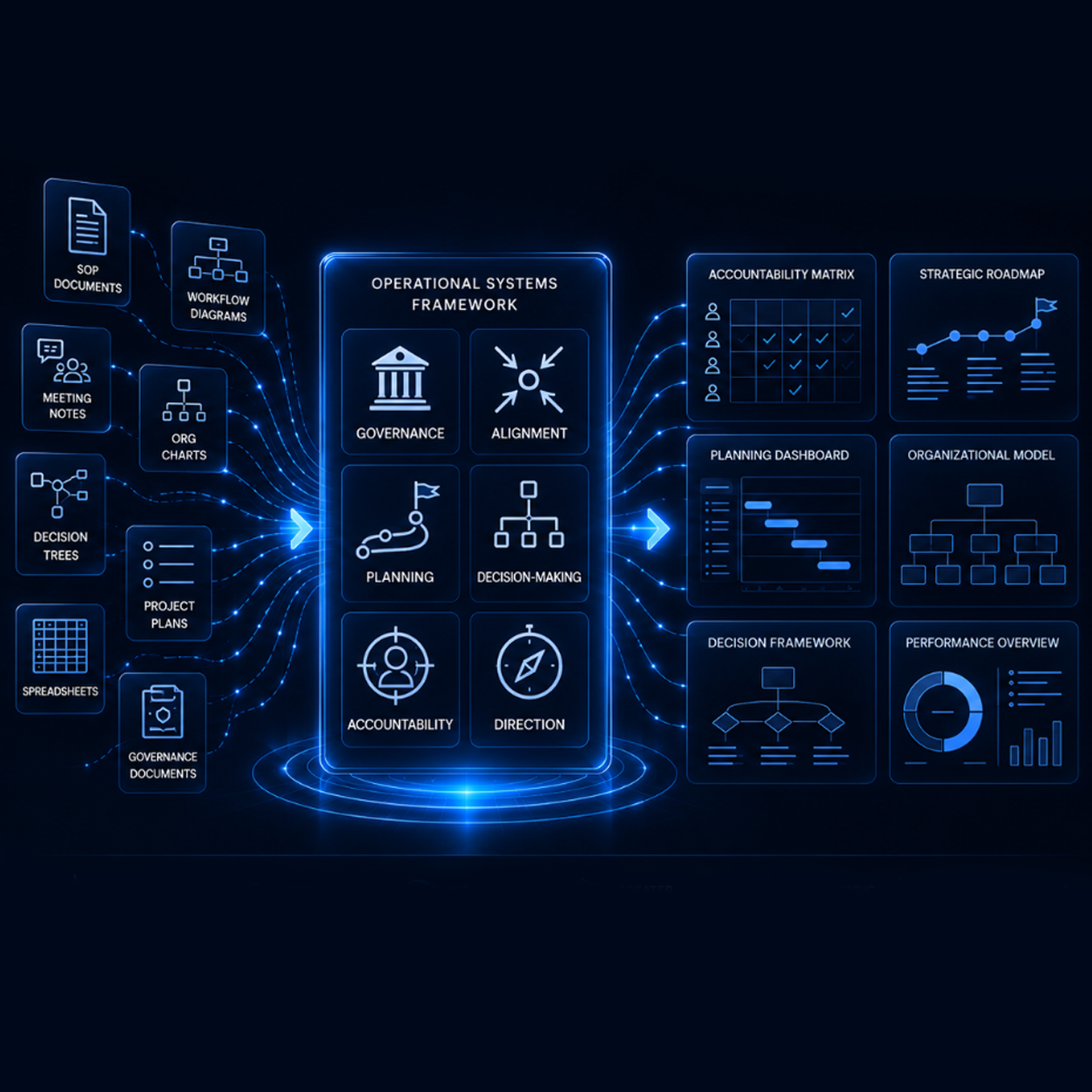
SYSTEMS IMPACT ORGANIZATIONAL DEVELOPMENT
Governance
Create clearer accountability, oversight, and operational direction.
Alignment
Ensure organizational systems, workflows, and objectives support one another.
Planning
Improve long-term operational planning and organizational preparedness.
Decision-Making
Support more consistent and informed organizational decisions.
Accountability
Clarify responsibilities, ownership, and execution expectations.
Direction
Create structured pathways for organizational development and future initiatives.
Digital modernization is not just about technology; it is about creating connected systems, improving organizational visibility, and enabling more effective communication and workflows.
Stronger digital operations today..
More adaptable organizations tomorrow.
// OPERATIONAL SYSTEMS OUTCOMES
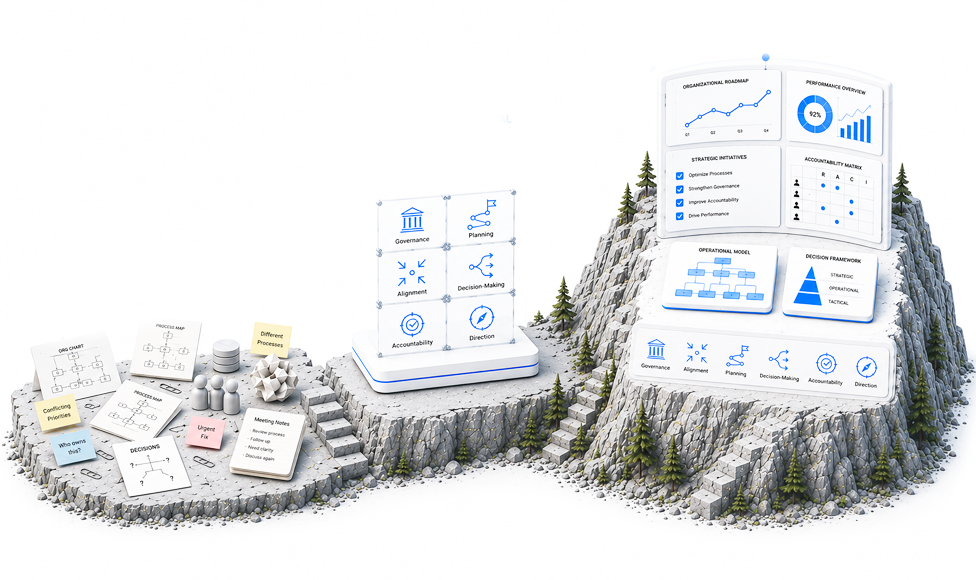
From Reactive Operations to Strategic Operational Design
Many organizations evolve through practical experience, departmental decisions, and incremental change rather than deliberate operational design. While functional, these environments often create unclear accountability, inconsistent processes, organizational dependencies, and limited visibility into how systems and workflows interact.
A structured operational systems strategy improves alignment, strengthens decision-making, and creates a more intentional framework for future growth and modernization.
A structured operational systems approach improves organizational effectiveness by strengthening governance, increasing alignment, and creating greater operational clarity.structured digital modernization approach improves operational effectiveness by increasing visibility, reducing friction, and strengthening organizational adaptability.
Operational Challenges
Organizations frequently encounter infrastructure challenges that reduce efficiency, increase support burdens, and create operational risk.
Unclear Operational Accountability
Responsibilities and decision-making authority are not consistently defined.
Inconsistent Organizational Processes
Teams and departments develop independent approaches to similar activities.
Reactive Decision-Making
Organizations spend more time responding to issues than planning strategically.
Limited Modernization Readiness
Operational systems struggle to support future technology, growth, or organizational change.
Operational Benefits
Structured infrastructure improves reliability, continuity and organizational resilence.
Stronger Organizational Alignment
Create greater consistency between objectives, systems, and operations.
Better Strategic Decision-Making
Improve visibility and structure around operational planning.
Clearer Accountability
Define responsibilities and decision-making frameworks more effectively.
Improved Organizational Readiness
Create greater preparedness for future growth, transition, and modernization efforts.
Improved Operational Coordination
Reduce friction between departments, teams, and workflows.
More Effective Modernization Planning
Create structured pathways for long-term organizational development.
// OPERATIONAL SYSTEMS REVIEW
Evaluate Your Operational Systems
Organizations seeking to improve governance frameworks, workflow architecture, operational planning, continuity readiness, or modernization strategy may request a confidential operational systems review through KoN Corporation.
OPERATIONAL ASSESSMENTS
SOP & DOCUMENTATION SYSTEMS
CONTINUITY & TRANSITION PLANNING
AI GOVERNANCE & MODERNIZATION
WORKFLOW ARCHITECTURE